The child who speaks it at home
Fluent in listening and speaking, often unable to read a word. They start where their reading is, not where their conversation is, so they are never bored and never humiliated.

LKG to Grade 5, with Grade 6 in production. Built on stroke-order research.
Computational thinking and AI for modern classrooms. Levels 1 to 9.
Available nowRecorded lectures, skill development courses and workshops.
Coming soonScan the QR on any lesson page and its digital content opens. Free with every book.
Level 0 to Level 13, six modules, 1.3 million activities.
Coding, computing activities and digital citizenship. Levels 1 to 9.
Coming soonOne year of unlimited Tamil for an individual learner, at their own pace.
The roll of honour: students, teachers and schools of the year.
One installer for Tamil Labs and Computing Labs. Windows, macOS or Linux.
Payil books and Thambaa Labs as one syllabus, for schools across India.
For Tamil Sangams, weekend schools and international schools abroad.
Level 13 in five streams, and a Centre of Excellence on your campus.
One year of Tamil for one learner, at their own pace, anywhere.
One partner per district in India, one per country internationally.
For Tamil Sangams, weekend schools and international schools. The same curriculum fifty schools in India run, built for a classroom where Tamil is not the language outside the door.
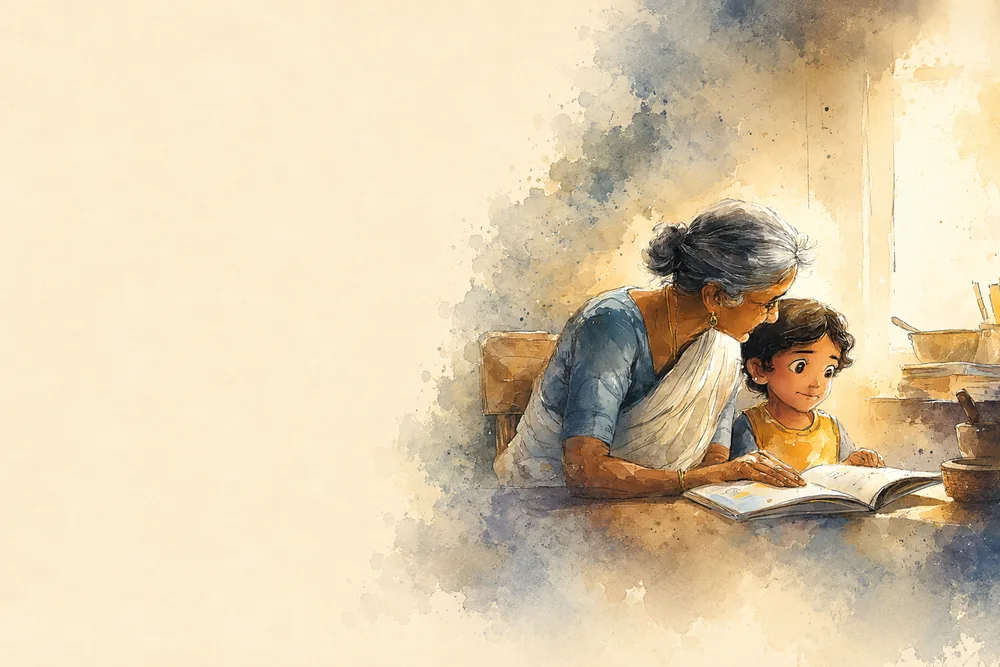
The children arrive willing. They leave willing. And then six days pass in another language, and by the next Saturday some of it has gone.
Meanwhile the class in front of you is nothing like a school class. One room, ages six to fourteen, some who speak Tamil at home and some who have only ever heard it. A single textbook cannot serve them all.
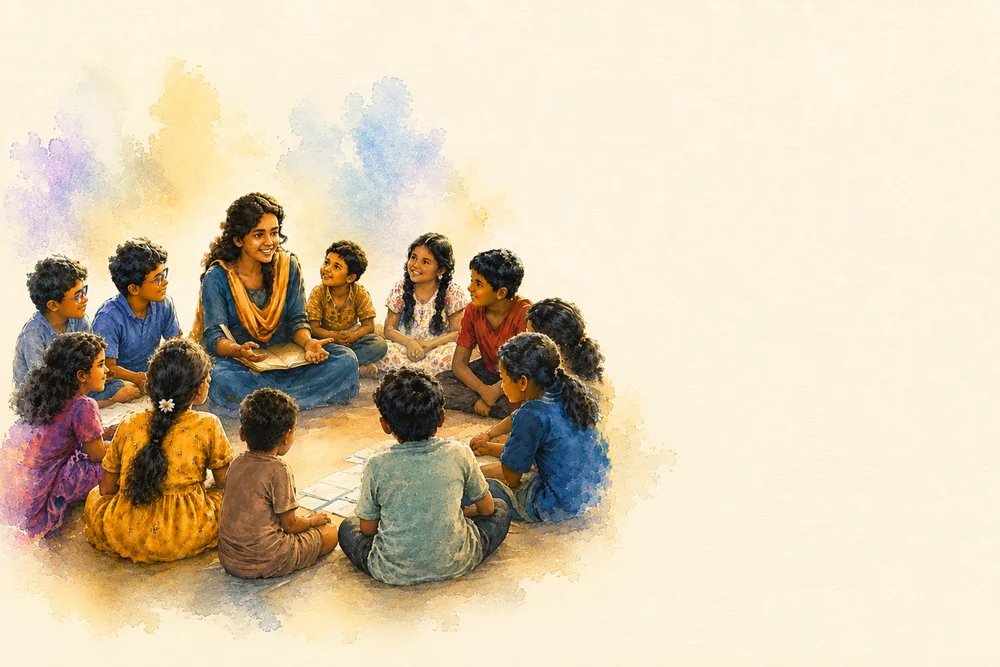 The part that matters most abroad
A level is set per child, not per class. In a Sangam classroom of twenty that spans eight years of age and every possible level of Tamil at home, this is the difference between a lesson and a compromise.
Fluent in listening and speaking, often unable to read a word. They start where their reading is, not where their conversation is, so they are never bored and never humiliated.
Grandparents on a video call, a song in the car. The Listening Intensive stream is built for exactly this child — no reading, no grammar, until listening has somewhere to stand.
Level 0 exists for them. Not a watered-down Level 1 — a foundation level with its own material, so a beginner of eleven is not handed a book made for a five-year-old.
One Tamil grammar syllabus underneath both — letters and sounds, then words, then nouns and verbs, then sentences, then figures of speech. Grade 6 in the book is Level 6 in the lab. See what each level covers.
LKG to Grade 5 available now, Grade 6 in production. Printed and shipped to you, with sample pages you can read before you commit. Flipbook samples of every level are below.
See the Payil Method
Level 0 to Level 13. Runs on a Windows or Mac computer, works offline once installed, and syncs when the connection comes back — which matters more in a community hall than in a school lab.
Tour the labsOrdering printed books from another country is a leap of faith. It should not have to be. Click any cover and read the sample first.
Samples are watermarked preview editions of 36 pages each; the printed books are longer. See how the levels are sequenced.
The first chapter is written for schools outside India. The eight that follow are the same ones every partner sees.
An introduction from Dr. Madhan Karky, and then the people who actually use it — students, parents, teachers and school management, in their own words.
Published with school permission.
A Sangam with sixty learners and a school with six hundred get the same console. Your whole programme on one screen, then each class and each teacher, with the ten skills separated out — which matters more abroad, where one room often holds several levels.
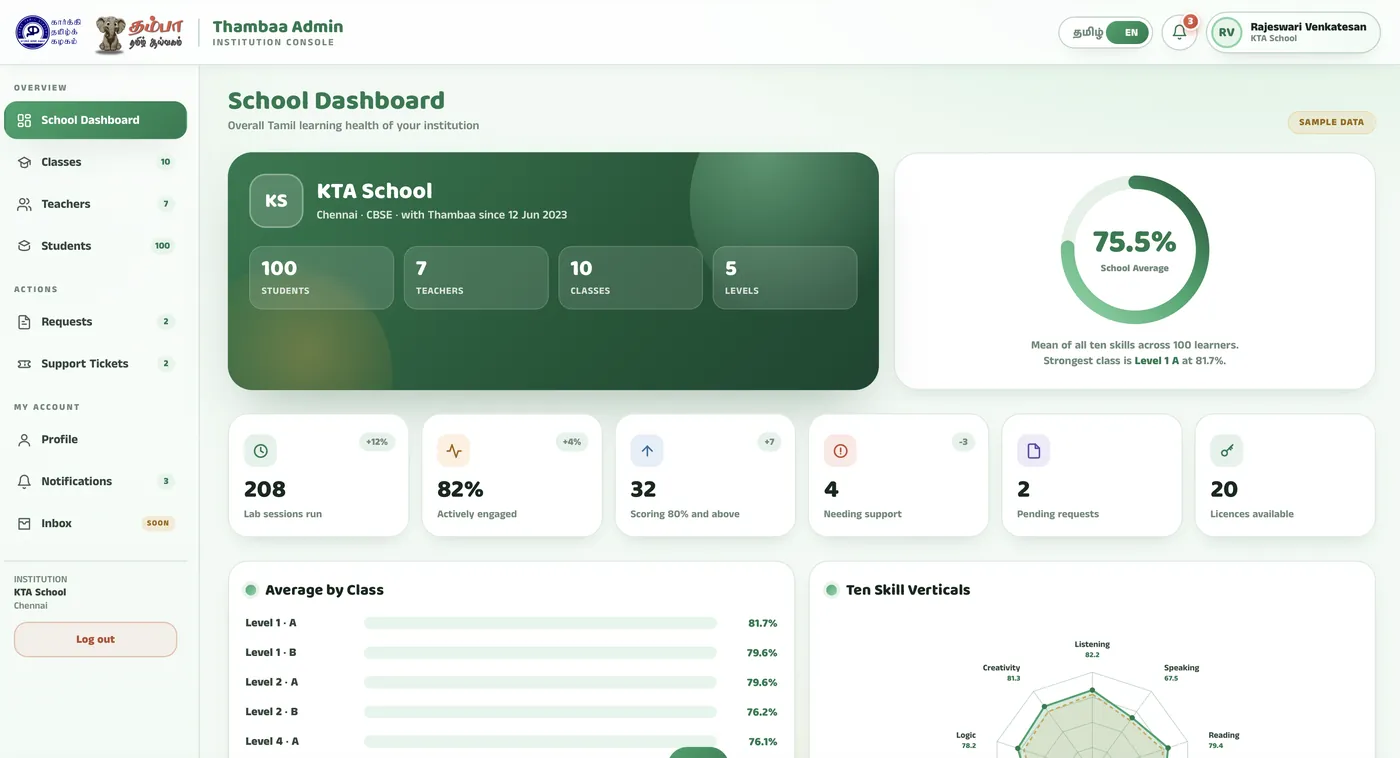
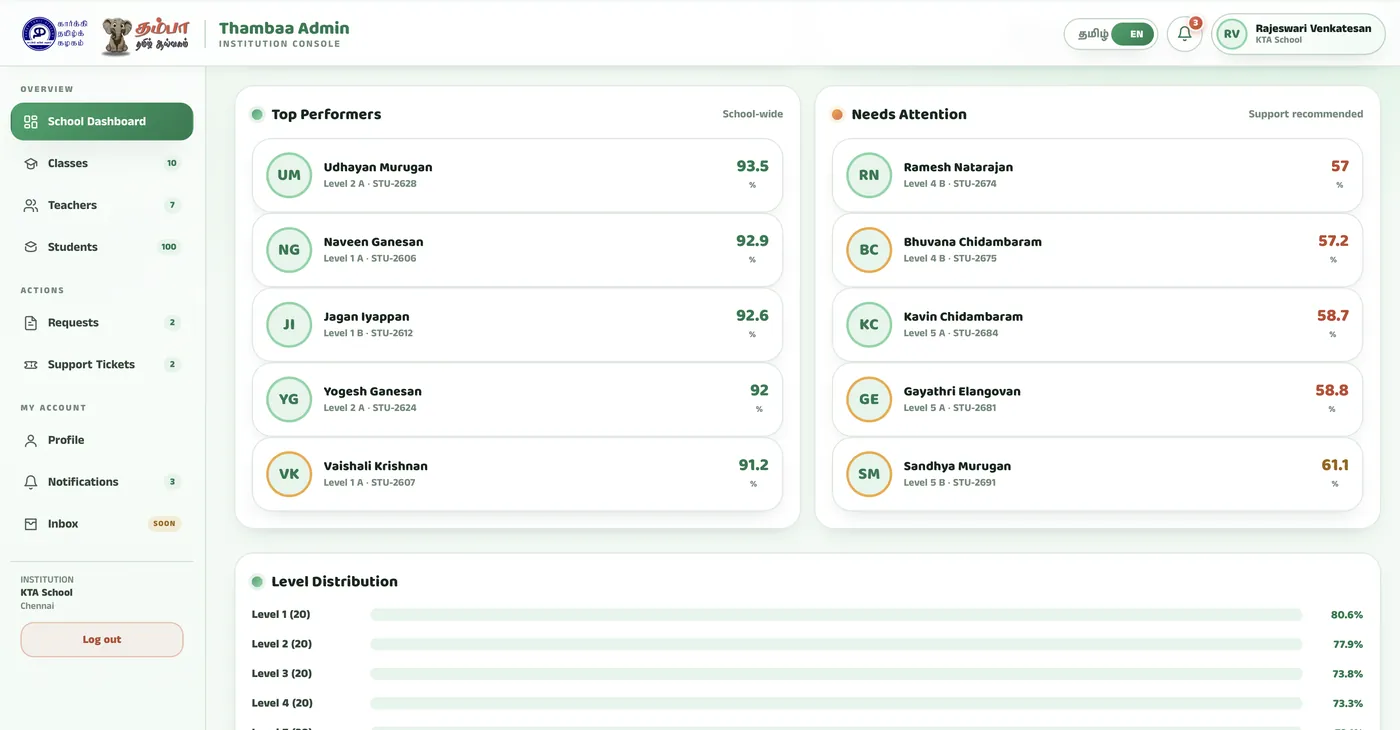
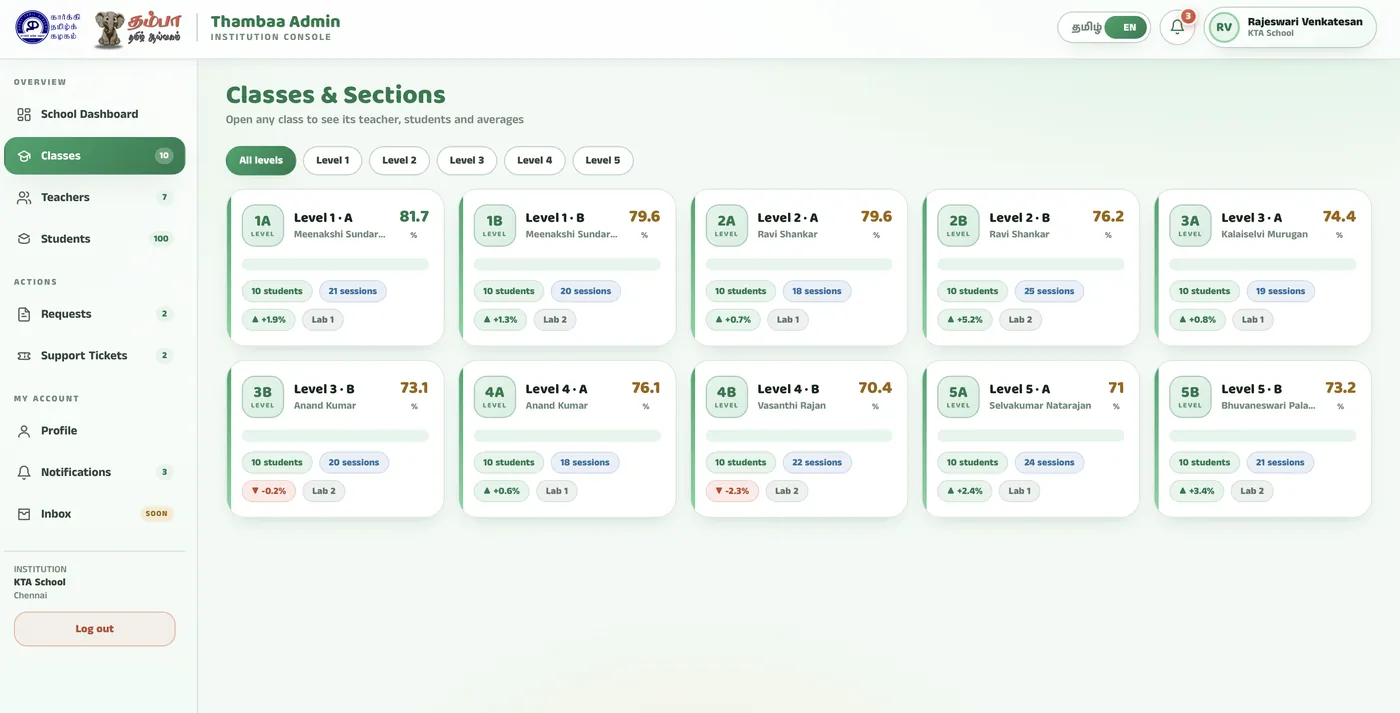
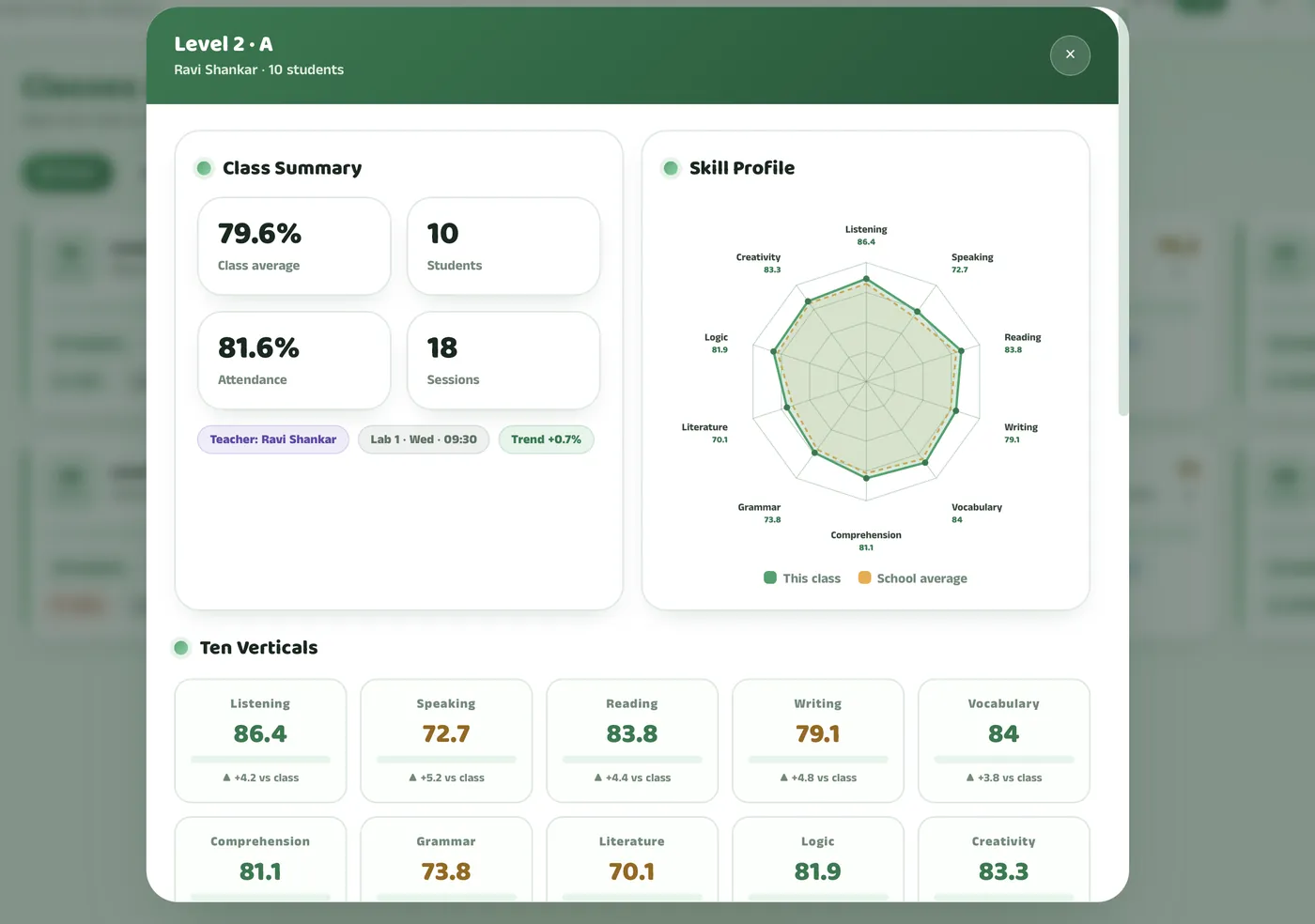
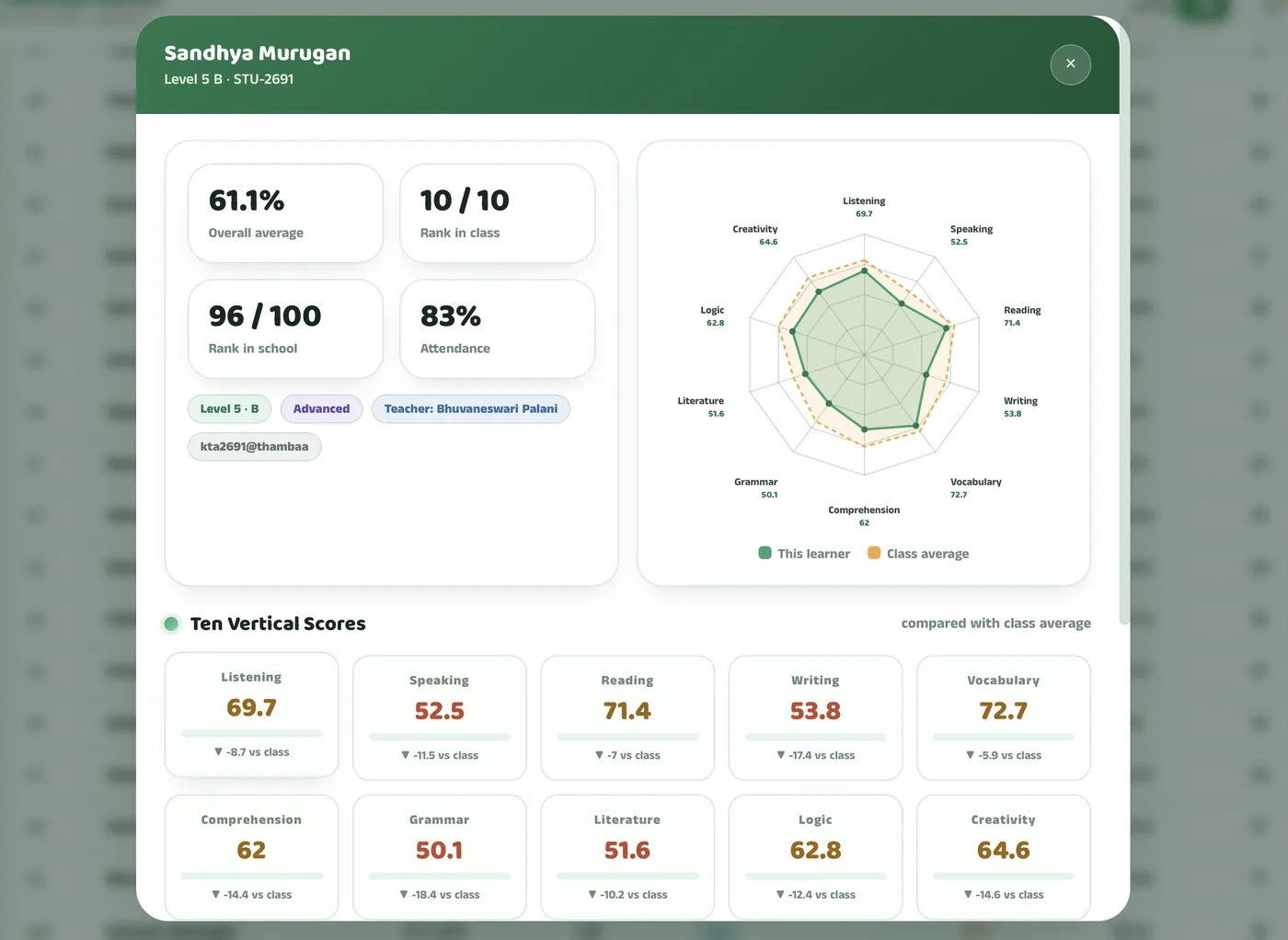
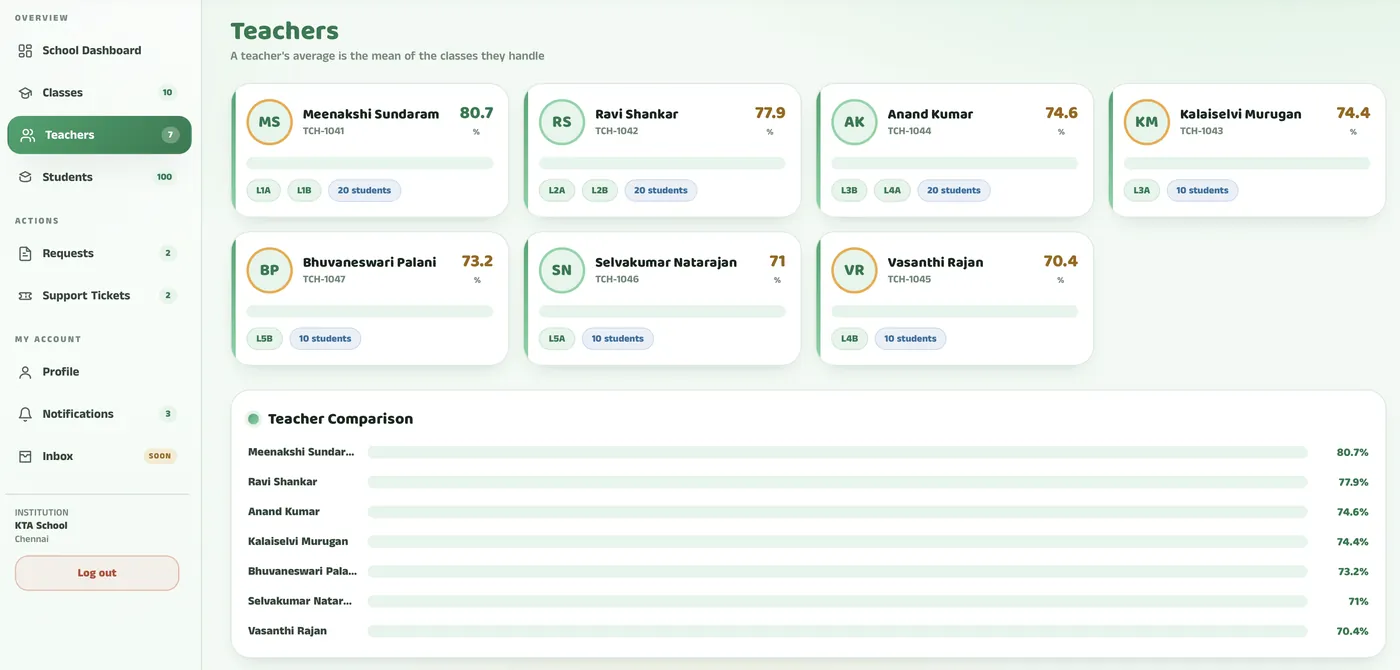
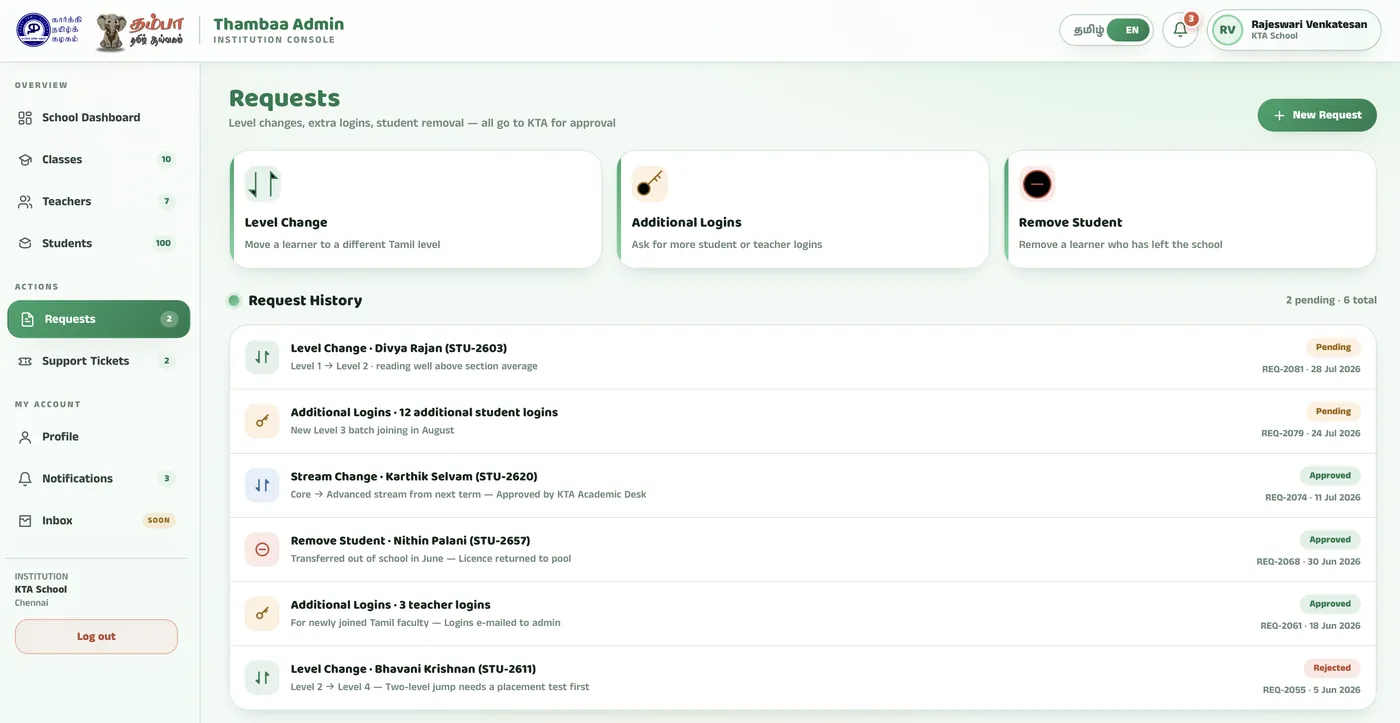
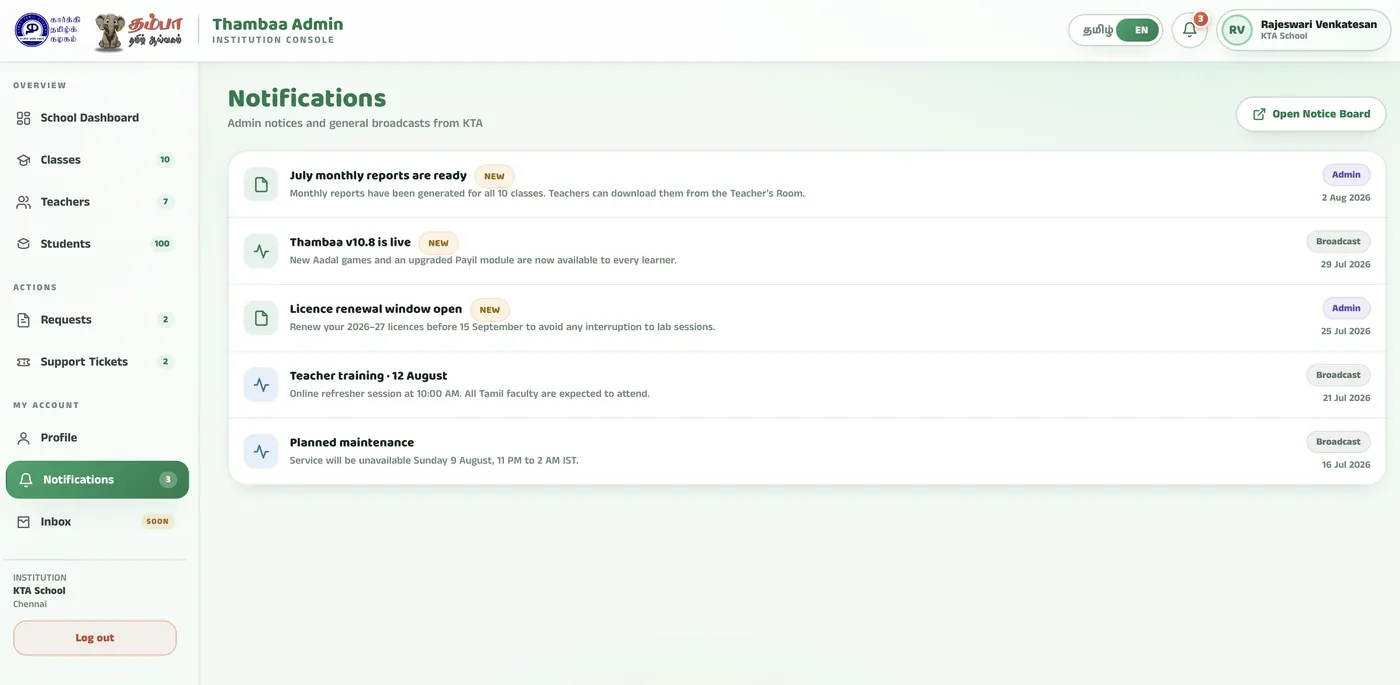
Sample data. Every name and figure in these screens is invented — no real learner appears. The console is in Tamil as well as English.
The full document, written for schools and Tamil Sangams alike. Forward it to your committee or your management.
Download the proposal PDF · 16 pages · 4 MB
Prices are quoted per country, so they are not in the document. Tell us where you are and we will send them.
A Sangam of thirty and an international school of nine hundred need different answers. Tell us which you are and we will send the right one.
Or write to academy@karky.in · +91 95000 01009
Some of the people who find this page are parents rather than organisers. Thambaa Indie gives one child a full year of Tamil at their own pace, at home — wherever home is. Learners have already enrolled from Singapore, the United States and New Zealand.